







Article
Myofascial Release for the Upper Back

Oct
The upper back is one of the areas where tension builds up most—from body weight, daily activities, and emotional stress. Myofascial release (SMR) can be especially effective here. In this article, we’ll show you step by step how to perform self-massage on your upper back.
What Is SMR?
Myofascial release (MFR/SMR) is a therapeutic technique that targets the fascia—the connective tissue that surrounds all your muscle fibers. SMR releases muscle tightness, trigger points, and movement restrictions. Trigger points often develop from chronic stress, poor posture, or injury, causing local and radiating pain. The thoracic spine plays a key role in upper body movement and posture; restricted mobility in this region can lead to muscle tension. The trapezius, arms, and hips are also frequently affected by upper back tension.
Tools You’ll Need
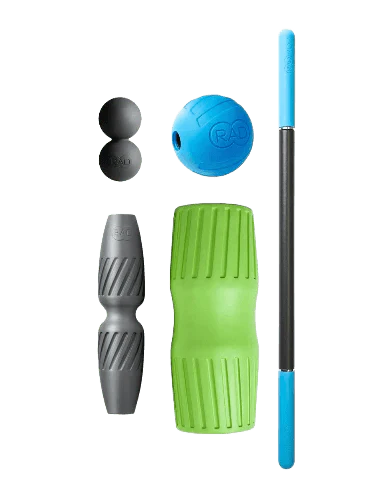
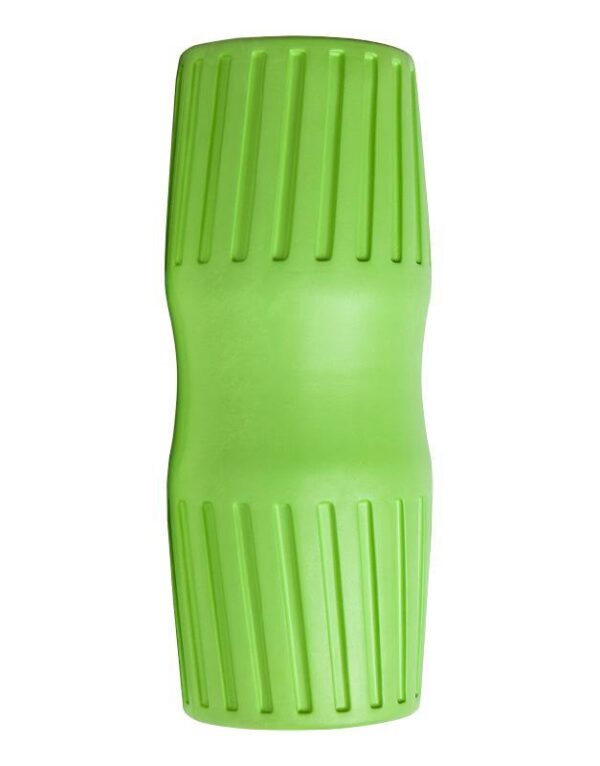
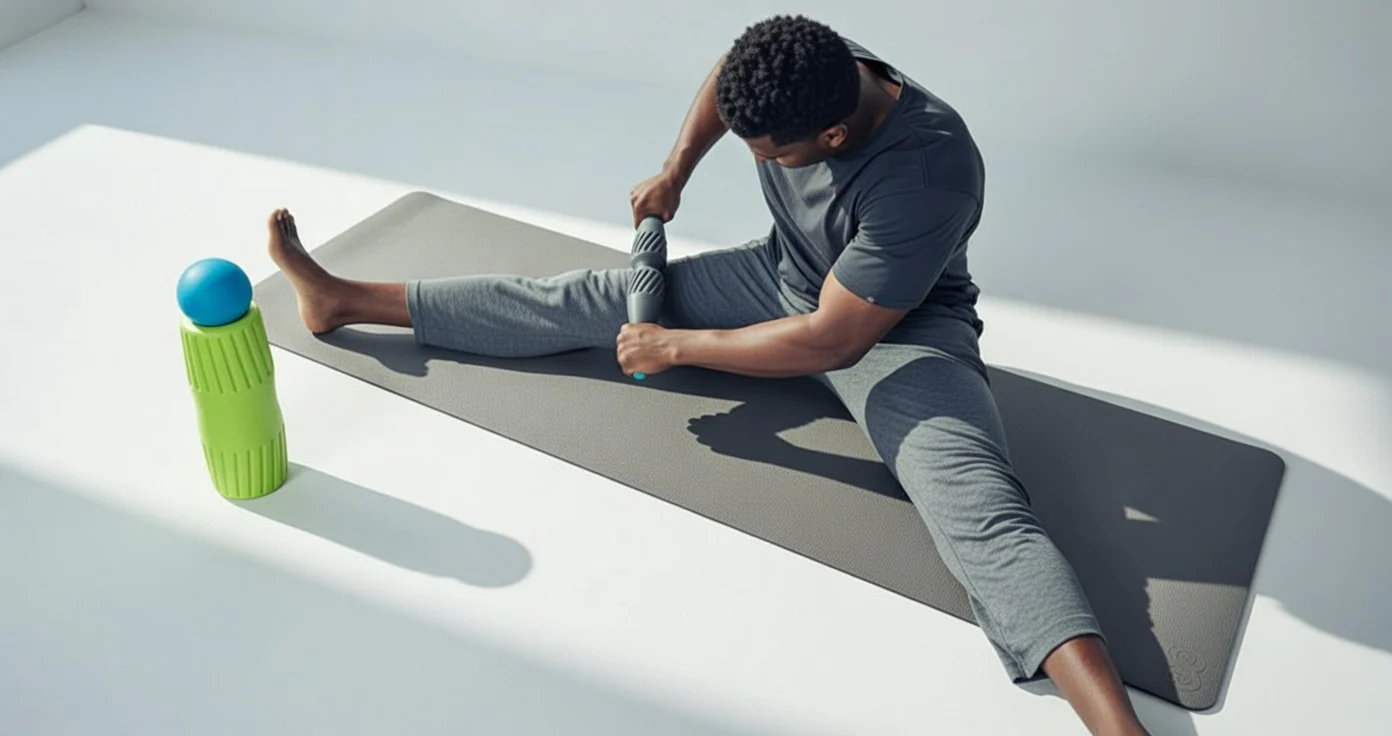
- Massage roller: start with a small to medium size—not too heavy, too firm, or too complicated. Your body needs time to adapt to the pressure. A tool designed for human anatomy, like the RAD Helix, is a good choice. Avoid rolling on bone and avoid pain.
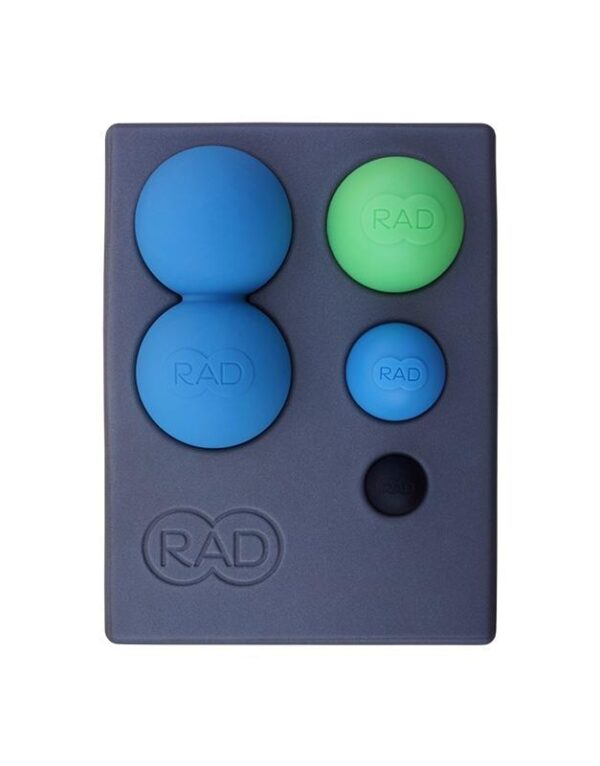

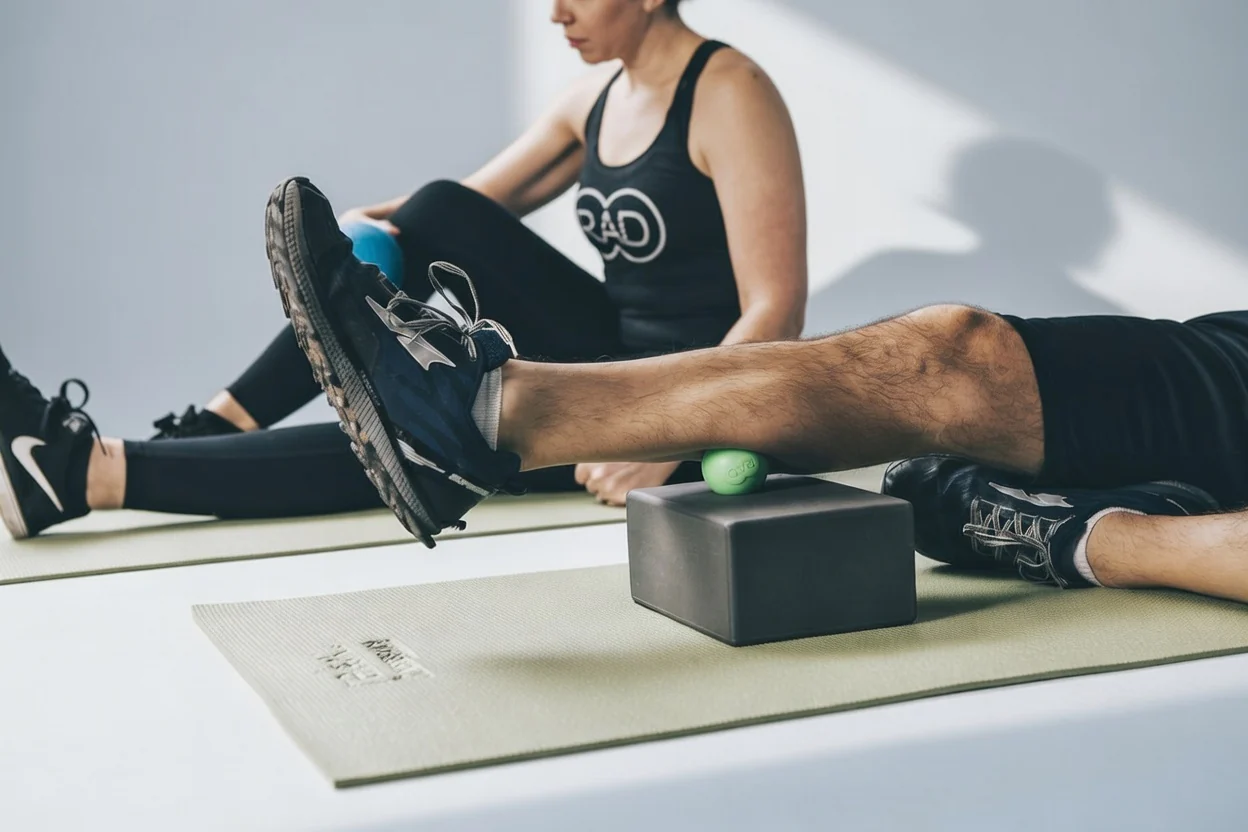
- Massage balls: many cheap products wear out in a few months—choose one that lasts. RAD offers SMR tools for every part of the body, with a lifetime guarantee.
- Therapeutic massage tool: have at least one tool for general, gentle, therapeutic massage—this could be a massage ball or soft roller that brings hydration and circulation to the layers of the skin.
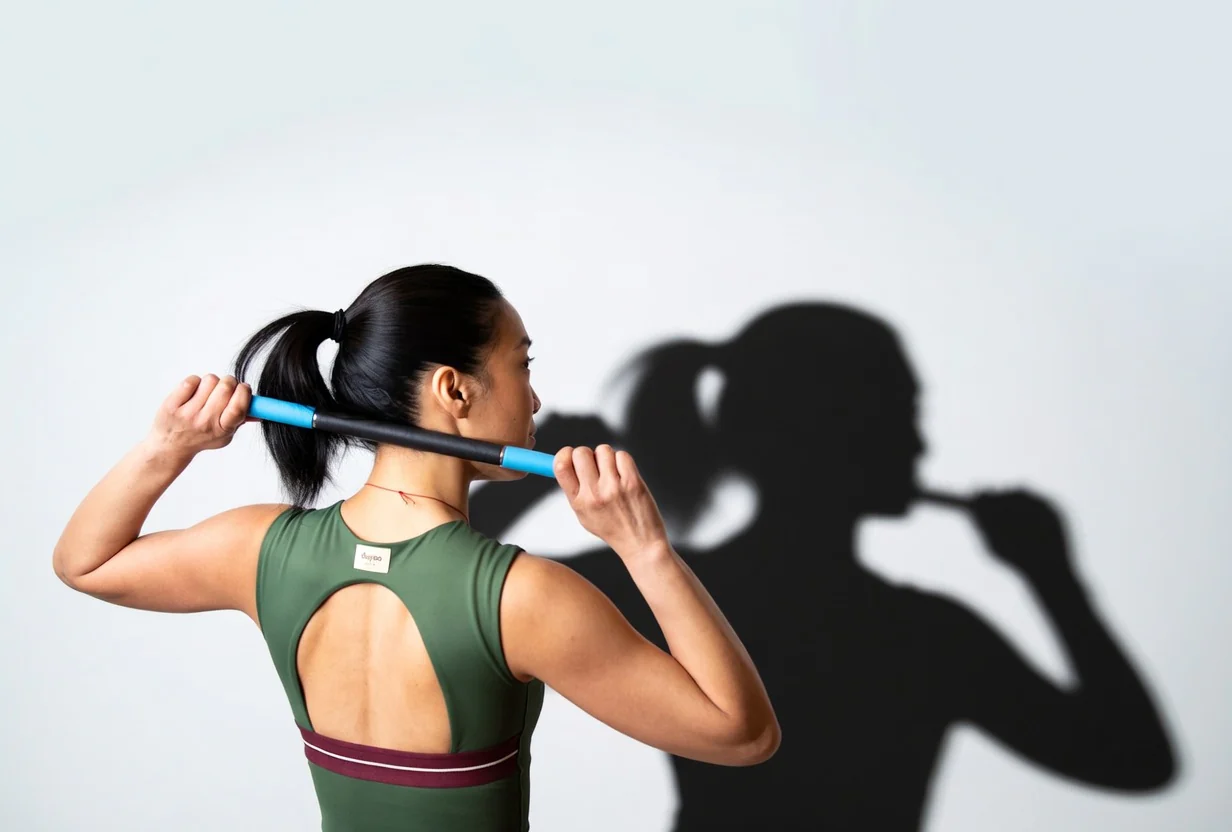
- Massage stick: consider incorporating a massage stick as well. These tools “flush” metabolic waste from the muscles toward the center of the body so your system can process and eliminate it faster. This can reduce recovery time and delayed onset muscle soreness (DOMS). Great for cool-downs, post-workout, and the next morning.
- Comfortable, quiet space for release—wherever you relax best.
- Disinfectant: cleaning after SMR extends the life of your tools and is better for your skin. Use disinfectant spray after each session, and deep clean every few uses.

Step 1: Prepare Your Space
Before you begin, find a comfortable, quiet place where you can lie down or sit undisturbed. Have your tools within reach.
Step 2: Using a Massage Roller
The roller is an excellent tool for upper back myofascial release. It targets large muscle groups beautifully, improves flexibility, and releases muscle tightness.
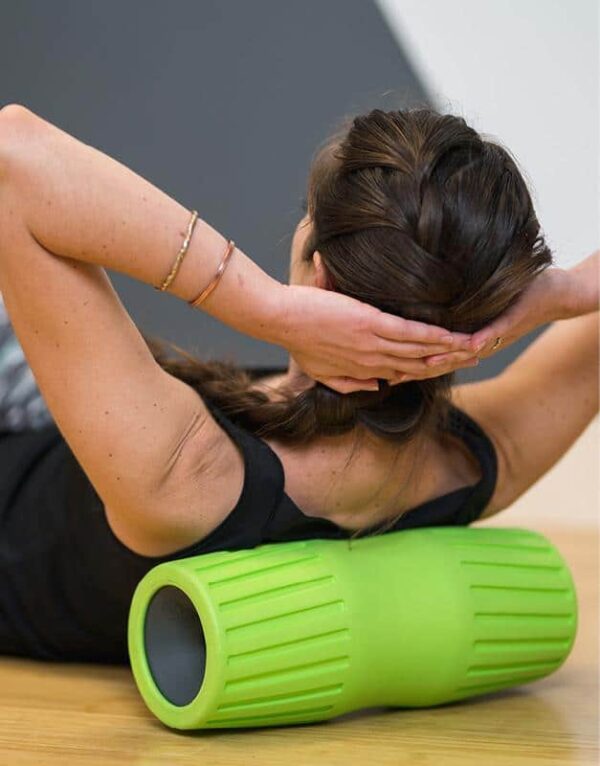
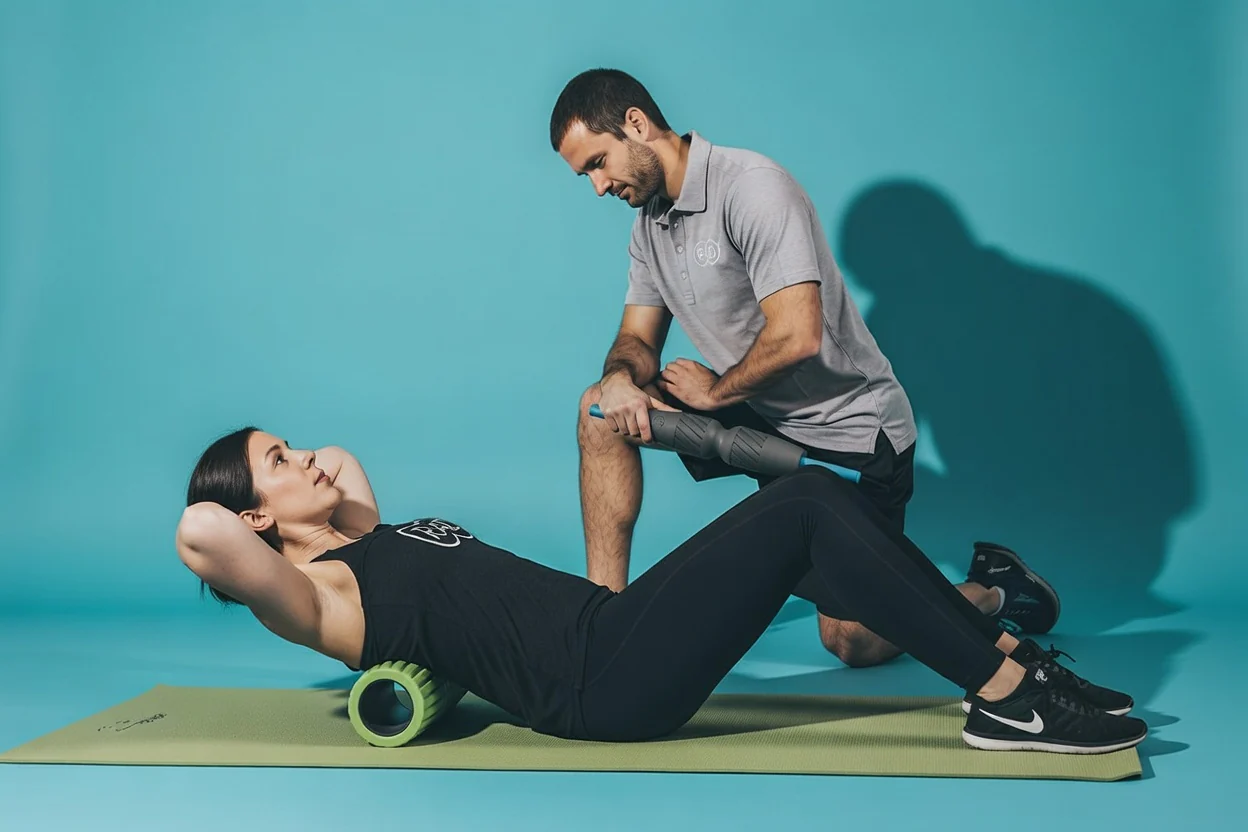
Get into position: sit on the floor with your legs extended, feet on the ground. Place the roller horizontally under your upper back, just below your shoulder blades.
Engage your core: bend your knees and place your feet on the floor to keep your body stable. Keep your core actively engaged so you don’t strain your lumbar spine.
Roll slowly: use your legs to push your body forward and backward over the roller. Move from the shoulder blades to the base of the neck, covering the entire upper back. Move slowly, allowing the muscles to release tension. On tight or sensitive spots, pause for a few seconds and gently apply more pressure for deeper release.
Targeted areas: for more targeted knots, roll to the side or pause on the spots where you feel the most discomfort. Breathe deeply and relax so the fascia can release the tension.
Step 3: Using a Massage Ball
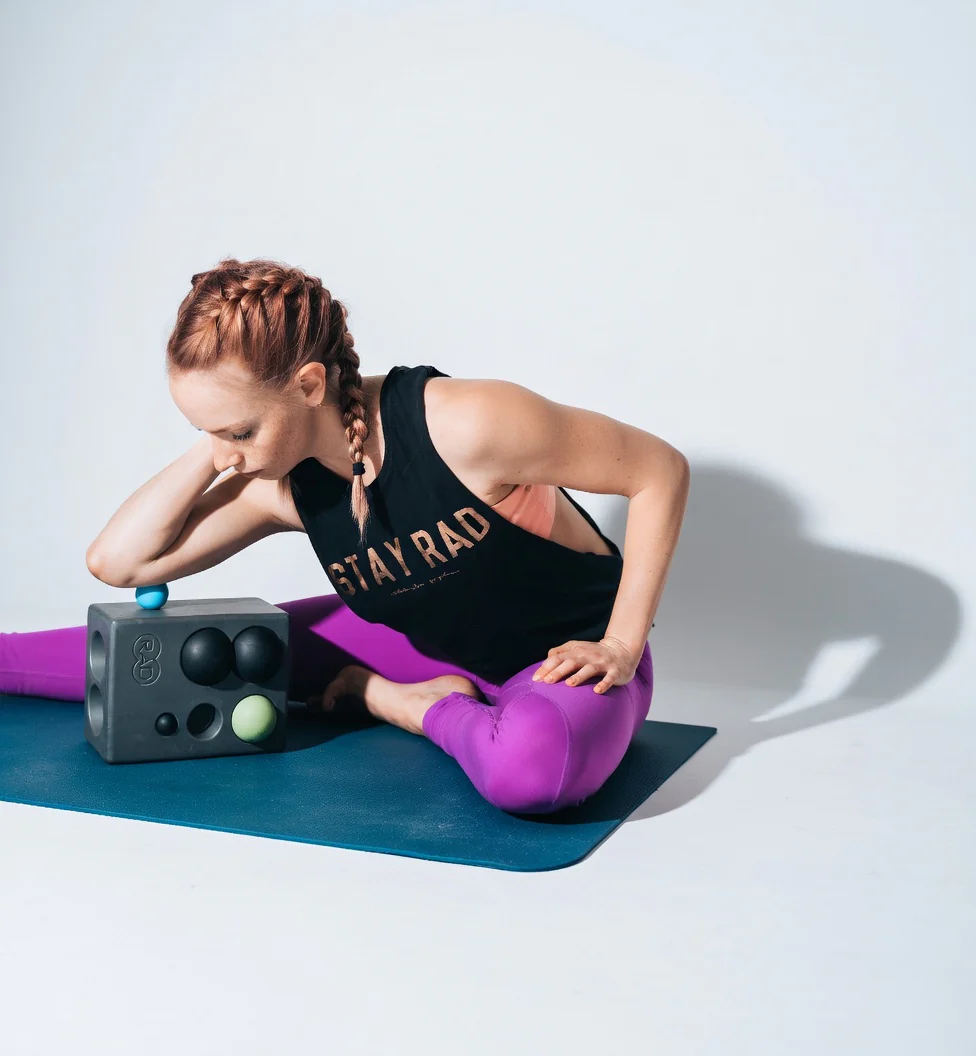
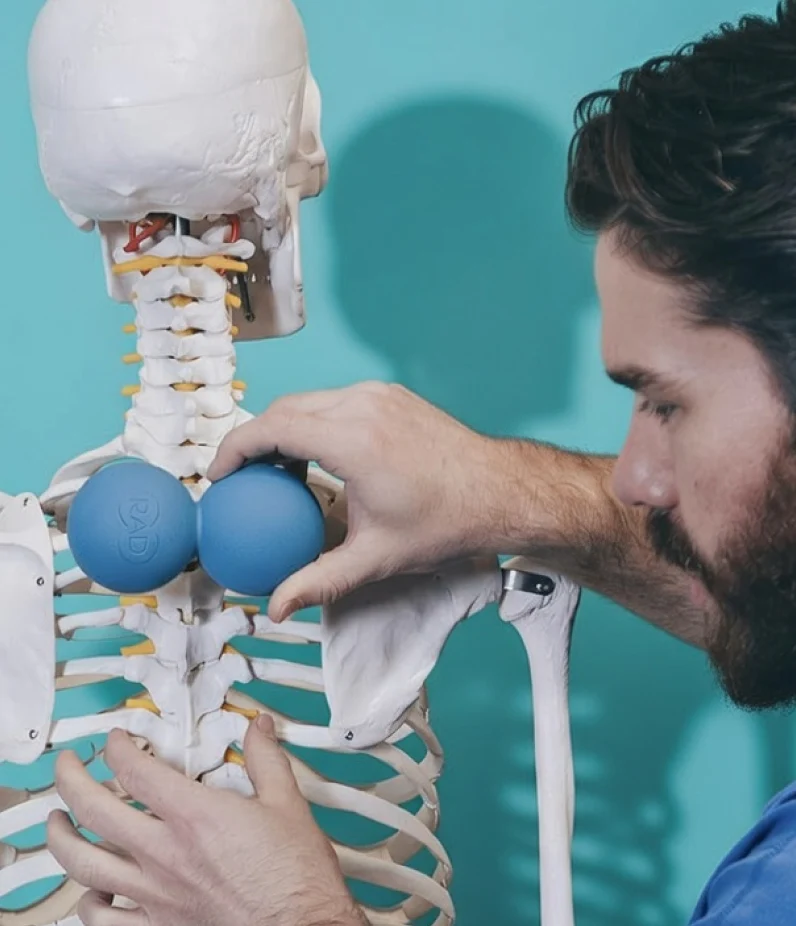
Massage balls (or a lacrosse ball) are ideal for targeting smaller, more localized tight spots in the upper back.
Position the ball: stand with your back to a wall, or lie on the floor. Place the ball between your upper back and the wall (or floor) where you feel tightness.
Apply gentle pressure: slowly move your body so the ball travels around—target the upper back, shoulder blades, and muscles along the spine. Focus on particularly tight, sensitive spots.
Hold for deeper release: when you find a sensitive spot, hold the ball on the area for 20–30 seconds with gentle pressure. Breathe deeply to relax the muscles.
Adjust the ball’s position: as needed, move the ball to other areas of the upper back, such as the trapezius or rhomboid muscles.
Step 4: Incorporate Stretching
After release, it’s important to stretch the mid and upper back muscles to increase flexibility and prevent tension from building up again. Here are a few beginner stretches:
Cat-cow stretch: start on all fours, wrists under shoulders, knees under hips. On the inhale, let your belly drop toward the floor, lift your head and tailbone (cow pose). On the exhale, round your back, draw your chin to your chest, navel toward your spine (cat pose). Repeat for 5–10 rounds to stretch and mobilize the upper back.
Thread the needle: from all fours, reach your right arm under your left arm and twist your torso so your shoulder and head come to the floor. Hold for 20–30 seconds, then switch sides. This stretch releases tension in the upper back and shoulder.
Step 5: Consistency Is Key
For lasting results, you need consistency. Build this practice into your weekly routine to prevent chronic pain and tightness in the upper back and improve mobility. You can perform self-massage up to three times a week, depending on your comfort level.
Additional Tips
Breathing
Breathe deeply throughout: in through the nose, out through the mouth—this helps your body relax and makes it easier for the muscles to release.
Intensity
Start with gentle pressure and gradually increase as your muscles adapt. Myofascial release should never be painful.
Hydration
Drink plenty of water after release to help flush out metabolic waste and hydrate your muscles.
Summary
Myofascial release is a simple and effective technique for relieving upper back pain and tension. Using rollers and massage balls combined with stretches, you can improve flexibility, reduce discomfort, and support your back health long term. Build these techniques into your self-care routine for a healthier, more mobile upper back.
Frequently Asked Questions
What causes upper back tightness?
Upper back tightness is often the result of poor posture, prolonged sitting, stress, and repetitive movements that cause muscle tension and fascial restriction.
Can myofascial release help with upper back pain?
Yes. When done regularly, it releases muscle knots, improves circulation, and restores mobility in the upper back.
How often should we release the upper back?
Most people benefit from 3–5 times per week, especially if they sit a lot or work at a desk.
Related Articles
- Myofascial Release for the Shoulder
- Self-Massage Techniques for Neck Pain
- Self-Massage Tools Everyone Needs
RELATED PRODUCTS
SUGGESTED PRODUCTS